The 37th British Machine Vision Conference · Lancaster, UK
Biomarker-Driven Medical Vision Intelligence
A BMVC 2026 workshop for computer vision methods that move beyond image-level prediction toward biologically grounded, clinically credible imaging biomarkers.
Updates
Latest announcements
Follow workshop news, submission updates, and invited speaker announcements.
OpenReview submission portal is open
Submit your work through the BD-MedVis OpenReview venue by 13 September 2026.
Submit paper on OpenReviewTwo leading voices in medical vision
Professor Yalin Zheng and Dr Sharib Ali will bring clinical and translational perspectives to the workshop.
Join us on 26 November 2026
Meet the community at Lancaster Town Hall during BMVC 2026.
Overview
Why this workshop matters now
Medical vision is increasingly judged not only by predictive accuracy, but by whether it yields stable, interpretable, and clinically meaningful evidence.
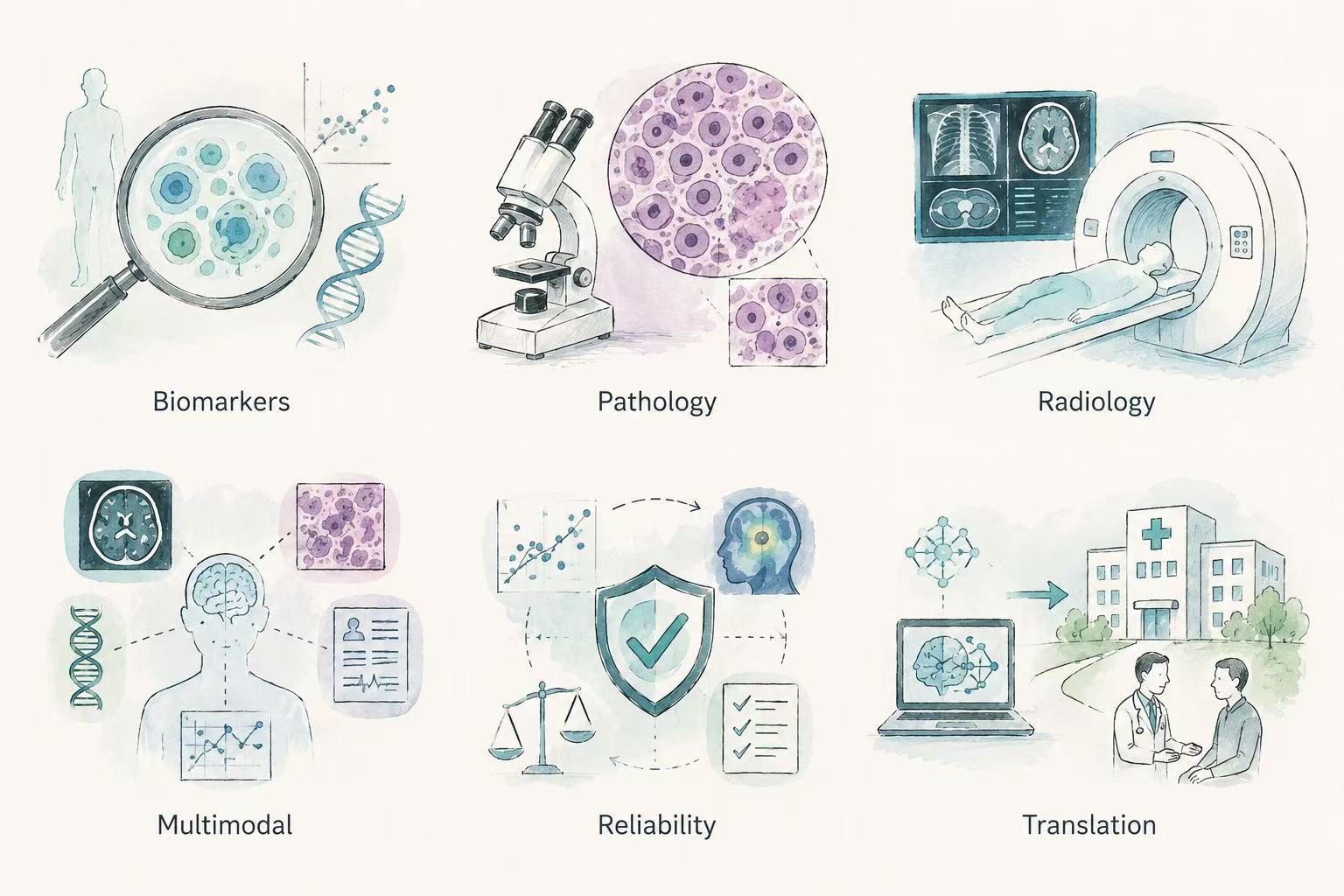
Biomarker-driven approaches connect BMVC strengths in representation learning, multimodal modelling, and visual reasoning with urgent needs in precision medicine, disease stratification, and treatment-response assessment.
Foundation models and large-scale biomedical datasets now enable richer image-derived phenotyping, while opening new opportunities for biomarker-aware reasoning, multimodal learning, and generative modelling of virtual biomarker patterns. Credible biomarker discovery still requires careful linkage to biology, clinical endpoints, uncertainty, bias, and reproducibility.
Workshop focus
From visual discovery to clinical impact
Explore the full journey from finding promising visual signals to building evidence that can stand up in clinical research and practice.
Discover biomarkers
Identify visual phenotypes and latent representations linked to pathology, radiology, molecular, spatial, and outcome signals.
Quantify evidence
Measure biomarker stability, uncertainty, biological plausibility, and clinical endpoint associations across datasets and cohorts.
Validate meaning
Test whether image-derived biomarkers remain interpretable, reproducible, and robust under domain shift and clinical constraints.
Translate responsibly
Connect methodological advances to bias-aware validation, deployment readiness, and equitable precision-medicine impact.
Topics
Topics of interest
Submissions are welcomed across biomedical computer vision, multimodal learning, and clinically grounded AI.
Imaging biomarker discovery and validation
Discovery, quantification, uncertainty estimation, and validation of image-derived biomarkers.
Computational pathology and spatial tissue analysis
Histology, tissue structure, molecular linkage, and clinically grounded pathology AI.
Radiology, radiogenomics, and outcomes
Visual reasoning across imaging phenotypes, genomics, outcomes, and treatment response.
Multimodal biomedical AI
Models that align image, molecular, spatial, clinical, and outcome signals.
Interpretability, robustness, and reproducibility
Clinically meaningful explanation, reproducible evaluation, bias analysis, and reliable deployment signals.
Responsible clinical translation
Evidence standards, clinical endpoints, deployment constraints, and equitable biomarker validation.
Program
A focused program built for exchange
Hear invited perspectives, discover selected research, meet authors, and join a multidisciplinary conversation.
Opening perspectives
Framing the opportunities and challenges for credible biomarker-oriented medical vision.
Invited talk I
Expert insight into clinically grounded medical vision and biomarker discovery.
Selected paper presentations
Selected papers presenting methods, datasets, validation studies, and clinical perspectives.
Interactive poster session
Focused conversations with authors across methods, evidence, applications, and emerging ideas.
Invited talk II
Connecting biomedical vision methods with translational evidence and clinical impact.
Panel and closing conversation
Moderated panel: “What makes an image-derived biomarker clinically credible?”
Invited speakers
Meet our invited speakers
Hear from researchers shaping clinically meaningful and translational medical vision.

Professor Yalin Zheng
Professor of AI in Healthcare, Department of Eye and Vision Sciences, University of Liverpool
Professor Zheng's research spans medical image analysis, artificial intelligence for healthcare, ophthalmic imaging, and clinically deployable diagnostic technologies, including AI-enabled retinal and systemic disease assessment.

Dr Sharib Ali
Associate Professor, University of Leeds; Founder and Lead, AI in Medicine and Surgery Group
Dr Ali works on medical and surgical image analysis, including endoscopic vision, cancer diagnosis, robust machine learning, benchmarking, and clinically meaningful AI evaluation.
Call for papers
Share your work with the BD-MedVis community.
We welcome original research, methodological contributions, clinical perspectives, benchmark studies, and critical analyses on biomarker-driven medical vision intelligence.
All submission deadlines are at 23:59 AoE. The submission portal is now open on OpenReview.
Organizing committee
Workshop organizers
Meet the interdisciplinary team bringing together medical image analysis, computational pathology, biomedical AI, and clinically grounded computer vision.
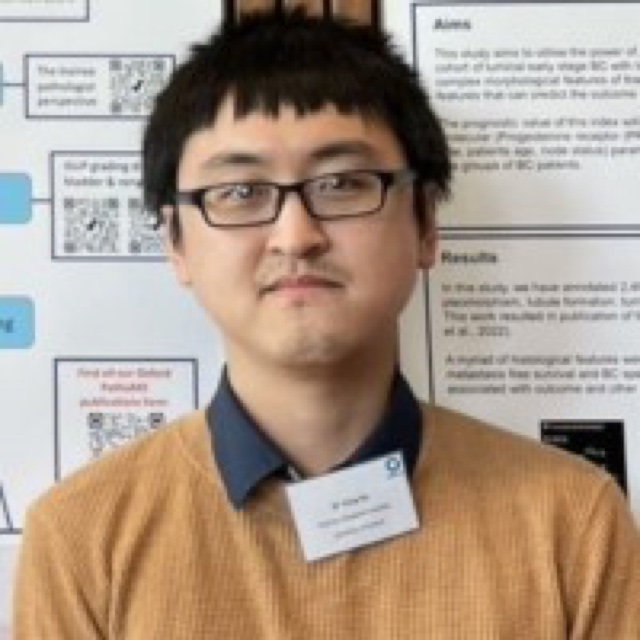

Dr Tianyang Zhang
Researcher, University of Oxford / University of Birmingham, UK
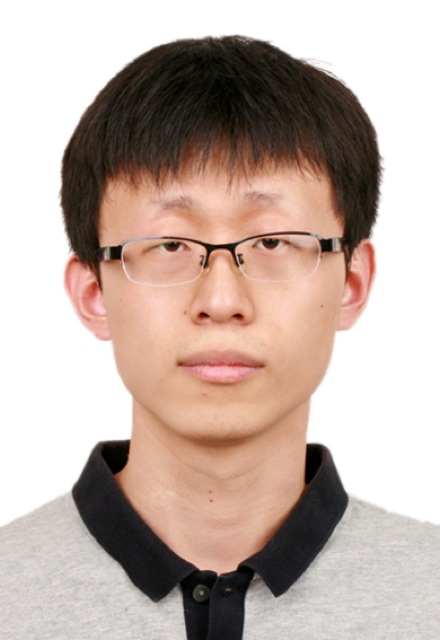
Dr He Zhao
Lecturer, University of Liverpool, UK

Dr Jian Chen
PhD Researcher, University of Cambridge, UK
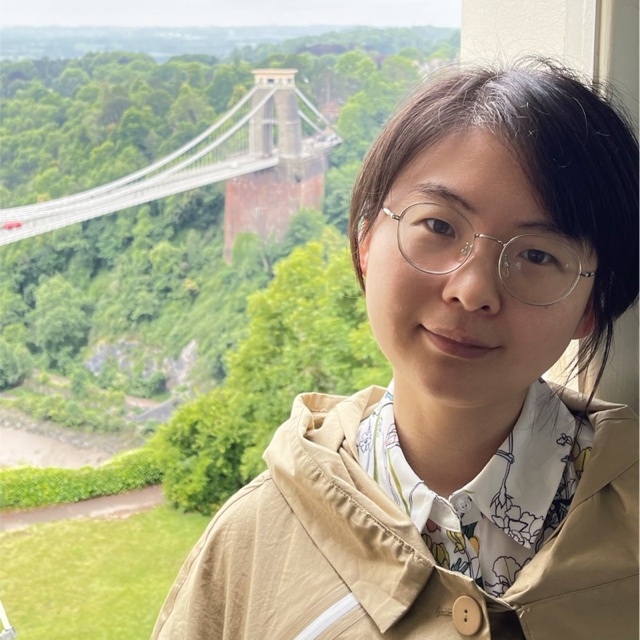
Dr Dan Dai
Lecturer, Aston University, UK
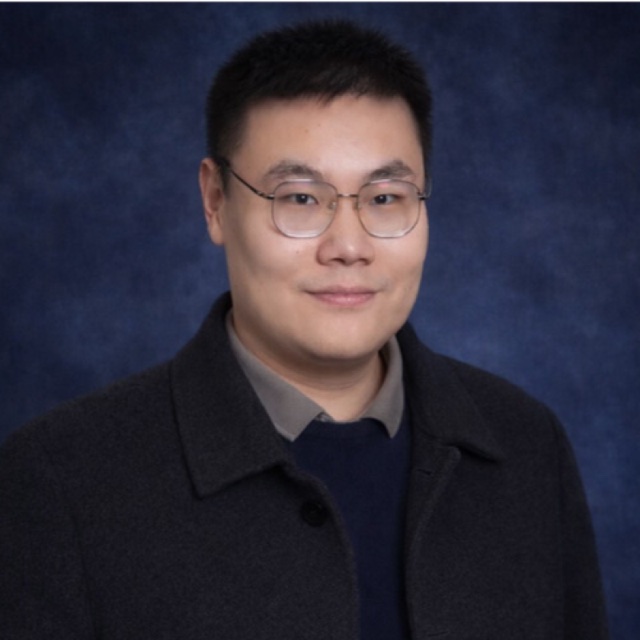
Dr Yakun Ju
Lecturer, University of Leicester, UK

Dr Le Zhang
Assistant Professor, University of Birmingham, UK

Dr Shangqi Gao
Research Associate, University of Cambridge, UK
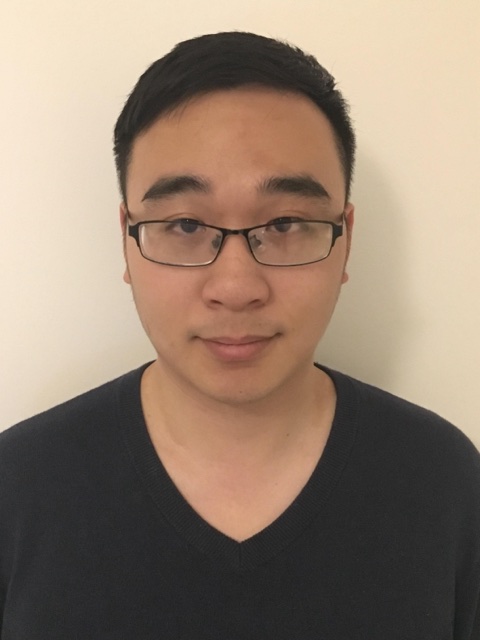
Dr Zheheng Jiang
Lecturer, University of Leicester, UK

Venue
Lancaster Town Hall, Lancaster, UK
Join us alongside the 37th British Machine Vision Conference at Lancaster Town Hall, where the medical vision community will come together to share research, build new connections, and shape the next generation of clinically credible imaging biomarkers.
BMVC 2026 main siteFAQ and contact
Common questions
For workshop enquiries, contact the organising team.
When is the workshop?
The workshop takes place on 26 November 2026. The detailed timetable will be published here when available.
Where will it take place?
It will be held with BMVC 2026 at Lancaster Town Hall, Lancaster, UK.
Can I submit work that is preliminary or cross-disciplinary?
Yes. We welcome work that creates meaningful connections across vision, medical imaging, biomedical AI, and clinical research. Review the current guidance and submit through the OpenReview portal.
Who should attend?
Computer vision researchers, medical image analysis researchers, computational pathology and radiology scientists, multimodal learning researchers, translational AI developers, and clinical collaborators.
Questions?
Email the primary contact for programme, submission, or logistics enquiries.
hy208@leicester.ac.uk